How to Measure and Weigh a Parcel Accurately
Learn how to record a packed parcel's dimensions and weight, understand volumetric weight, and avoid common mistakes when requesting a shipping quote.
Before we get into it
The quick takeaways
- Measure and weigh the finished package, including its box, cushioning and label.
- Record each parcel separately and check the units before requesting a quote.
- A service may price a large, light parcel using its volumetric weight.
Why accurate parcel details matter
A useful shipping quote starts with a description of the parcel that will actually be handed over. The dimensions of an unpacked product are rarely the dimensions of the final shipment. A box adds width, protective material adds depth, and everything together adds weight. Measuring after packing gives you a consistent starting point when comparing services. It also makes it easier to check a booking later: you can compare the numbers you entered with the same sealed parcel, rather than trying to remember which measurements belonged to the item alone.
Measure the outside of the finished package
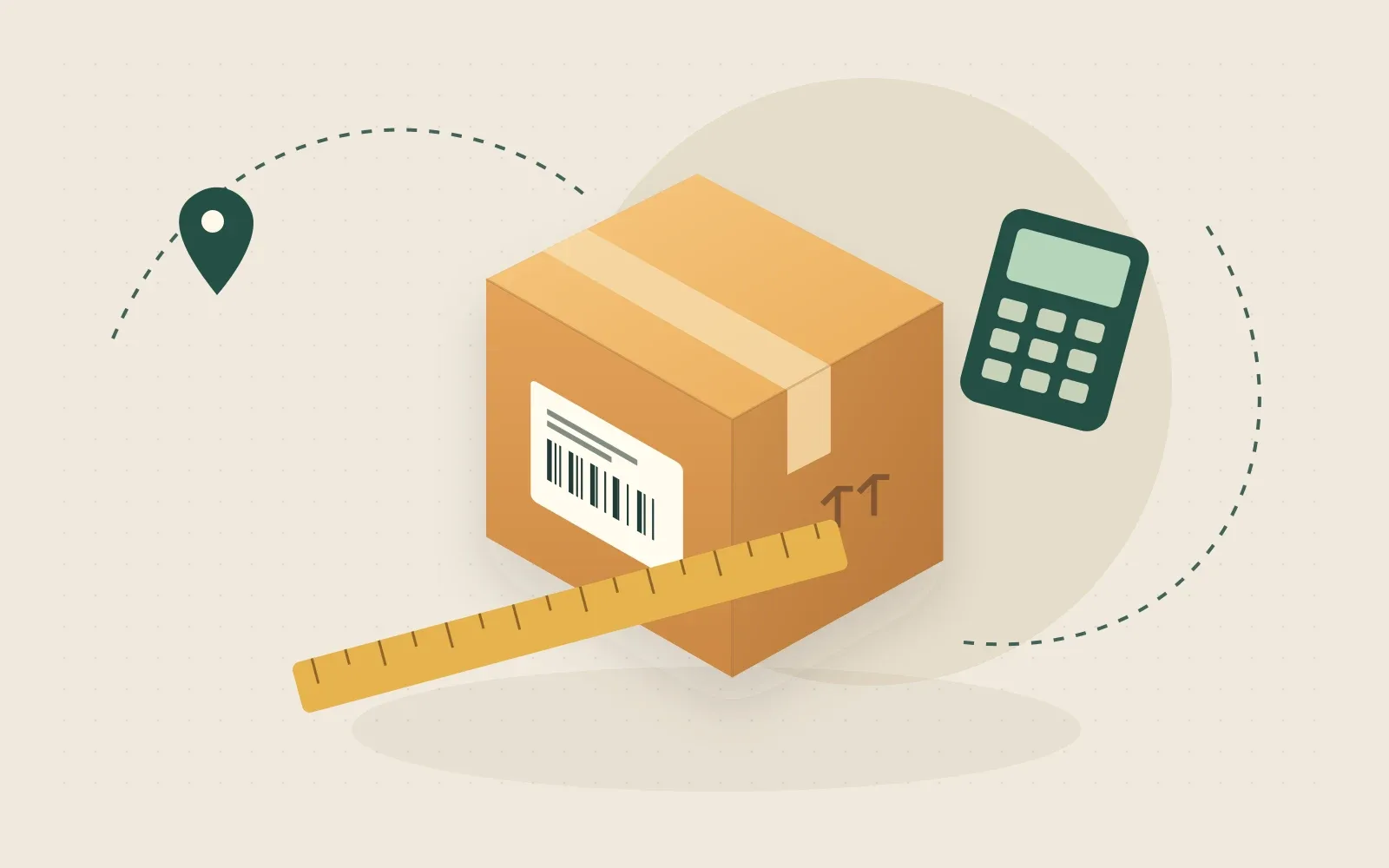
Pack the item, add its protective material, close the flaps and seal the box before taking measurements. Place it on a level surface and measure its outside edges. Include a bulging side or protruding packaging rather than recording the smaller space inside the box. Most parcel forms ask for length, width and height. For a rectangular box, use a consistent approach, such as recording its longest edge as the length. If your chosen service gives different measurement instructions, follow those instructions.
- Measure all three outside dimensions with a ruler or tape measure.
- Keep the measurement unit consistent across the three fields.
- Read the service's rounding instructions before entering a fractional measurement.
- Check whether the package fits the service's size, weight and shape limits.
- Measure unusually shaped packages using the carrier's guidance for that shape.
Weigh the complete parcel
Use a scale suitable for the size and expected weight of your shipment. Make sure the display is at zero and that the parcel is fully supported without leaning on another surface. Include the outer box, internal packaging and any documents attached to it. Read the unit on the scale carefully: 850 grams is 0.85 kilograms, while 8.5 kilograms describes a very different parcel. Write down the result beside the dimensions immediately. For several packages, label your notes Parcel 1, Parcel 2 and so on to keep each set together.
Understand actual and volumetric weight
Actual weight is the reading from the scale. Volumetric weight, also called dimensional weight, represents the space occupied by the package. Many services compare these two values when calculating a chargeable weight. The formula commonly uses length multiplied by width multiplied by height, divided by the service's dimensional factor. That factor, the units and rounding rules depend on the carrier and product. Check the selected service rather than assuming the same calculation applies to every quote.
| Detail | What it represents |
|---|---|
| Outer dimensions | The space occupied by the finished package. |
| Actual weight | The complete package's scale reading. |
| Volumetric weight | A calculation based on package volume and the selected service's factor. |
Keep protective packaging while reducing wasted space
A smaller suitable box can reduce empty space, but the contents still need appropriate protection. Start by choosing packaging that fits the item and the journey, then measure the result. Removing essential cushioning simply to reduce a dimension can create a different problem. For repeat shipments, keep a short packaging record for each product: box type, typical packed weight and how it was measured. Treat that record as a starting point, then check the actual parcel whenever the contents, packaging or number of items changes.
Common mistakes to catch before booking
- Entering the product's dimensions instead of the packed parcel's dimensions.
- Reading a scale in grams but selecting kilograms on the booking form.
- Copying dimensions from a box listing without checking the finished package.
- Using one parcel's details for a second parcel that has different contents.
- Forgetting to measure again after changing the box or adding another item.
Your final measurement check
Before comparing prices, read the numbers back against the parcel in front of you. Confirm the three dimensions, the weight and the units. Keep a brief record with the shipment reference so you can answer questions about the booking later. A photo of the sealed package next to the tape measure or on the scale may help your own records, although a carrier's investigation or claims process may require other evidence. When details change, obtain an updated quote before handing over the shipment.
Further reading
DHL Express: Weight and dimensions. https://www.dhl.com/discover/en-gb/ship-with-dhl/products-and-services/weight-and-dimensions
FedEx: What is dimensional weight? https://www.fedex.com/en-us/shipping/packaging/what-is-dimensional-weight.html